

โšก IPL & T20 season live now. Get your AllPanelExch ID on WhatsApp in 2 minutes โ†’ Get ID Now

AllPanel Exchange, The Full Back And Lay Playbook

Does exchange betting feel hard to understand? It isn't. On this page I walk you through back, lay, liquidity, commission and greening up, all with real numbers. Read it through, then get your ID on WhatsApp in 2 minutes and see the market for yourself.

Real Back-Lay Odds ๐Ÿ“Š Worked Examples ๐Ÿ’ธ 2-5% Commission Only
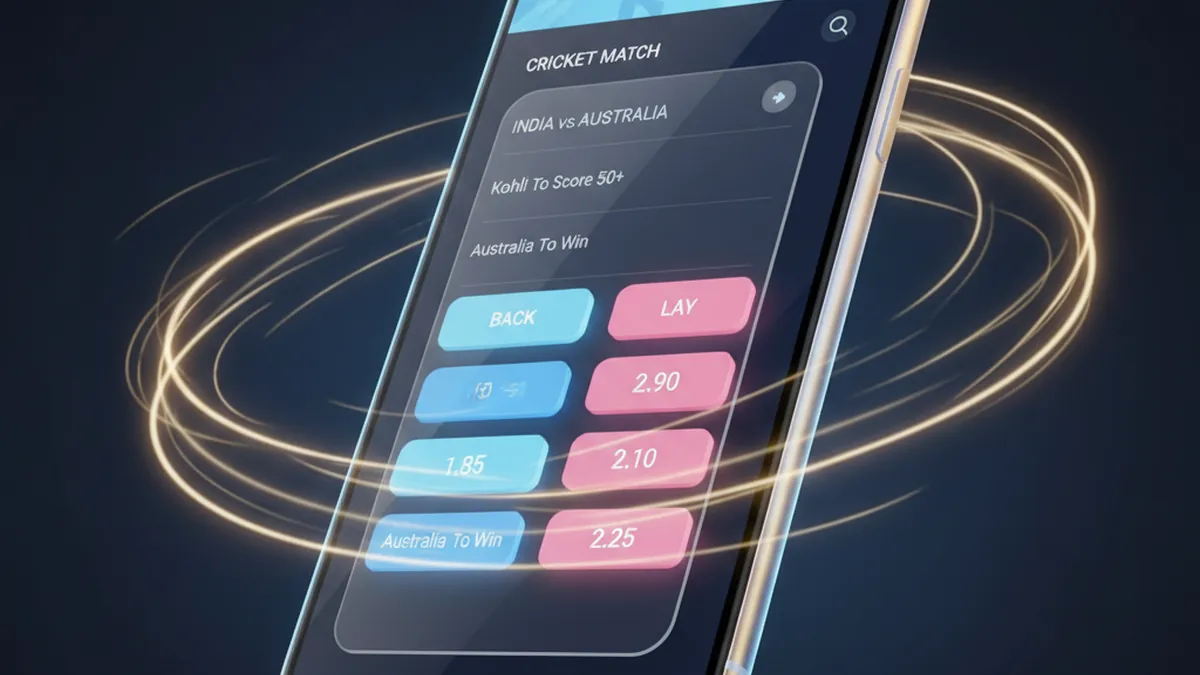
AllPanel Exchange odds board showing back and lay columns for a cricket match
0Markets Per Match
0Commission On Wins
0Avg. Payout Time
0Markets & Support
๐Ÿ“ˆ Exchange Basics

How Does Exchange Betting Actually Work?

Let's get the basics straight first. On a normal betting site you play against the bookmaker. The bookmaker sets the odds, quietly buries his own margin inside them, and all you can do is say yes or no. On All Panel Exchange the setup is different. The platform itself never accepts a single bet. It simply matches two players against each other, one who says this will happen, and one who says it won't.

Picture an IPL match, Mumbai vs Chennai. I say Mumbai will win and put 1,000 points on at odds of 1.90. You say they won't, and you take the opposite position against me at the same 1.90. The exchange matches our two orders. If Mumbai win, your points come to me. If they lose, mine go to you. The platform sits in the middle and takes a small commission from the winner only. That's it, that's the entire model.

This model is exactly why exchange odds are always tighter. The bookmaker's 6 to 10 percent margin simply vanishes here because the market itself decides the price, through demand and supply, just like the share market. I've used both types since 2019 and on the same match the exchange has consistently given me a better rate, especially on the big IPL betting games. And yes, all of it runs on a single online cricket ID, no messing about with separate accounts.

Get AllPanel Exchange ID โ†’
AllPanel Exchange app screen with live cricket market and back lay buttons
๐Ÿ”ต๐Ÿ”ด Core Concept

Back And Lay, Explained With Real Numbers

Enough theory. Let's get into real numbers, because you never truly understand an exchange until you've seen the numbers.

Back bet: you get paid if the outcome HAPPENS

Back is the simple one, the same thing you've always done in normal betting. You pick an outcome and say this will happen. India will win, 55+ runs will come in 6 overs, Kohli will hit a fifty, anything at all. In a back bet your maximum loss is always your stake, never a rupee more. The profit formula: profit = (odds - 1) x stake. Look at the table:

Back BetOddsStakeProfit If WonLoss If Lost
Back India (Match Odds)2.001,000+1,000-1,000
Back Australia (Match Odds)3.50500+1,250-500
Back Over 55.5 (6 Over Runs)1.851,000+850-1,000
Back Draw (Test Match)8.00200+1,400-200

See that? Put 500 on at 3.50 and a win pays (3.50 - 1) x 500 = 1,250, plus your stake back. Lose and only the 500 is gone. Simple. The exchange screen shows this exact calculation live under the blue button, so you never have to work it out yourself, but you should still know the formula so you're never betting blind.

Lay bet: you get paid if the outcome does NOT happen

Now the thing that makes an exchange special. Laying means you've become the bookmaker. You're saying this will NOT happen. India will not win, 55+ runs will NOT come in 6 overs. Another player backs that outcome and you accept their bet. Your profit is their stake, and your risk is liability = (odds - 1) x stake. This liability concept is exactly where new players make their most expensive mistakes, so study the table carefully:

Lay BetOddsStakeLiability (Risk)Profit If Outcome Fails
Lay India (Match Odds)2.001,0001,000+1,000
Lay Chennai (Match Odds)3.005001,000+500
Lay Favourite (Match Odds)1.501,000500+1,000
Lay Under 55.5 (Session)4.00250750+250

Look at the second row. You lay Chennai at 3.00 with a 500 stake. If Chennai lose, you win 500. If Chennai win, you pay out (3.00 - 1) x 500 = 1,000. In other words, at higher odds the risk on a lay can be far bigger than the stake. So burn this rule in: on a back bet watch your stake, on a lay bet watch your liability. Laying a low priced favourite is cheap on risk, as the third row shows, laying 1,000 at 1.50 leaves a liability of only 500.

When does a lay come in handy? When you think the favourite is overrated. In every match one team soaks up the public's money and its odds get pushed artificially low. Laying that team is the bread and butter of experienced exchange players. Second use: in an 8 team tournament you want to say this team will NOT win it. With a bookmaker that would take 7 separate bets, on an exchange a single lay does the job.

Matched and unmatched bets: understand this too

Two things can happen after you place a bet on an exchange. If money is standing on the other side at your price, the bet gets matched instantly and it's locked in. If not, the bet goes into the unmatched queue and waits for someone to come to your price. You can cancel an unmatched bet or change its price at any time, no penalty.

There's a smart use for this too: you can place a bet at a better rate than the current price. The market's at 1.92 but you want 2.00? Put your back in at 2.00 and leave it. If the odds get there your bet matches on its own, if they don't your money comes back. Just watch one thing in-play, on big moments like a wicket falling the odds move so fast that your unmatched bet gets left behind. So keep your price a little flexible in live trading, being greedy for one or two extra ticks sometimes costs you the whole move. Partial matches happen too, 600 of your 1,000 matched and 400 unmatched, both show separately on screen, so don't panic when you see it.

Packed cricket stadium at night, the kind of match where exchange liquidity peaks
๐Ÿ’ง Market Depth

Liquidity: The Fuel Of An Exchange

Liquidity is the total money standing in a market waiting to be matched. On the exchange screen every price has an amount under it, say 84,000 under Back 1.92. That means bets worth up to 84,000 points will match instantly at 1.92. That's liquidity.

High liquidity gives you three wins. First, your bet matches in seconds, no money sitting around unmatched. Second, the spread stays tight, meaning the gap between the back and lay price is small, like 1.92 back and 1.94 lay. Third, you can enter and exit quickly in-play, which for trading is a life and death matter.

Want an example of a low liquidity market? A day two game in some random league, where the back sits at 1.80 and the lay at 2.10. Try trading inside that 30 point gap and you've booked a loss at entry itself. So here's my straight advice: in the beginning play only the IPL, international cricket and the big tournaments. In those matches the liquidity on AllPanel Exchange is so high that even stakes in lakhs match instantly. On the cricket betting ID page I've also covered liquidity patterns format by format.

One small pro tip: a fresh flood of liquidity arrives right after the toss and at the innings break. If you have a big stake to place, those two windows are your best friends.

Betting Exchange India Guide โ†’
๐Ÿ’ธ Charges

Commission Structure: How The Exchange Makes Money

A bookmaker hides his margin inside the odds. An exchange hides nothing, it simply takes a commission from the winner. That's what makes the system fairer.

On AllPanel Exchange, commission applies only and strictly to the net profit of winning bets, usually between 2 and 5 percent depending on the market. Let me clear up three things people regularly get wrong:

  • Zero commission on losing bets. If you lose, all that's gone is your stake or liability, nothing extra gets cut on top.
  • Commission is on profit, not stake. Stake 1,000, make 900 profit, and commission applies to the 900 only, not the full 1,900.
  • Deposits and withdrawals are free. Put money in or pull it out via UPI, there's no processing fee. Payouts land in 10 to 15 minutes on average too.
ScenarioNet ProfitCommission @3%You Take Home
Back India 2.00, stake 1,000, won1,00030970 + stake back
Lay Chennai 3.00, stake 500, Chennai lost50015485
Session profit of 85085025.50824.50
Any losing bet00No extra deduction

Now compare: a bookmaker's 1.85 odds versus the exchange's 1.95 minus 3% commission. The effective return on the exchange is still higher. That's why serious players never go back to fixed odds. Just mind one thing, when you're greening up, include commission in your maths, otherwise the green number on screen will be a little more than what actually lands in your hand. Ask the WhatsApp team for the current exact rate, promotions sometimes run a commission discount too.

For the nerds, here's a handy formula that lets you compare an exchange price directly with a bookmaker's: effective odds = 1 + (odds - 1) x (1 - commission). Example: you get 1.95 on the exchange with 3% commission, so effective odds = 1 + 0.95 x 0.97 = 1.92. That 1.92 still beats the bookmaker's 1.85. As long as the exchange's commission-adjusted price sits above the bookmaker's, the exchange is the right place to be, and in practice that's true in 95% of cases. Only in very small illiquid markets does it occasionally flip, and you shouldn't be playing those anyway.

๐ŸŸข Trading Basics

Greening Up: Locking In Profit Mid Match

This is the skill that turns an exchange from gambling into trading. Read it carefully, then read it twice.

The core idea of exchange trading is the same as the share market: buy cheap, sell dear. Here you're buying and selling odds. Back at high odds, lay at low odds, and the difference in between becomes your profit, whoever ends up winning the match. When you size both positions so that every outcome shows an equal green profit next to it, that's called greening up. Now the worked example:

  1. Step 1, Back: Mumbai vs Chennai. After the toss Mumbai are at odds of 2.10. I reckon Mumbai will do well in the powerplay, so I back 1,000 at 2.10.
  2. Step 2, Odds move: Mumbai smash 68 in 6 overs without losing a wicket. The market reacts, and Mumbai's odds drop to 1.60.
  3. Step 3, Lay: Now I lay Mumbai at 1.60. The green-up stake formula: (back odds x back stake) / lay odds = (2.10 x 1,000) / 1.60 = a lay of 1,312.
  4. Step 4, Whatever the result: If Mumbai win, the back pays +1,100, the lay liability is -787, net +313. If Mumbai lose, the back costs -1,000, the lay pays +1,312, net +312. Green on both sides.
PositionOddsStakeMumbai WinMumbai Lose
Back Mumbai2.101,000+1,100-1,000
Lay Mumbai1.601,312-787+1,312
Net (before commission)+313+312

See what happened there? I never predicted the match result, I only predicted the movement of the odds. Mumbai can lose it off the last over for all I care, my profit is already locked. It works in reverse too, lay first at high odds, then back once the odds drift up. And if your read turns out wrong and the odds go against you, you can book a small loss and exit, which traders call redding out. A small controlled loss always beats swallowing the full one.

Honest truth: greening up looks simple but it's a timing game. Odds movement is never guaranteed, and sometimes you'll grab the wrong side. So practise with small stakes. Take a demo ID first, watch how the market flows, then move to real points. The demo is free on WhatsApp.

๐Ÿ Fancy Markets

Session Market Trading, India's Favourite

Match odds exist on every exchange in the world, but session and fancy markets are Indian exchanges' very own thing. A session is a market on a small slice of the match: 6 over runs, 10 over runs, 15 over runs, individual player runs, fall of wicket, boundaries count. On AllPanel Exchange a single IPL match opens 40+ markets like these.

A session market runs on a line, something like 6 over runs: 48-50. You can play YES at 50 if you think more will be scored, or NO at 48 if you think fewer. The line moves after every ball. A wicket drags the line down 4-6 runs, two boundaries push it up. That movement is exactly where the trading happens.

Example: the 6 over session line is at 48. The first over goes for 14 and the line races up to 56. If you'd played YES at 48, you can now play NO at 56 and lock in profit on both sides, exactly like greening up. That's what session traders do, small locked profits all the way through the match.

Three golden session rules I paid expensive fees to learn: first, never play a session right after a wicket falls, let the line's overreaction settle. Second, only take pre-match sessions after checking the pitch report and ground size. Third, never put more than 10 percent of your total bankroll into sessions in a single match, because session variance is far higher than match odds.

IPL Session Markets Guide โ†’
โš ๏ธ Stay Safe

6 Mistakes Every New Exchange Player Makes

I built this list by sinking my own money and my friends' money. You get to learn it for free.

๐Ÿ”ด

Treating A Lay Like A Back

The costliest mistake of all. You lay 1,000 at 4.00 thinking the risk is 1,000, and the actual liability turns out to be 3,000. Before you press the lay button, confirm the liability on screen, every single time.

๐Ÿœ๏ธ

Trading In Dry Markets

In a low liquidity match the spread is so wide that you're in loss the moment you enter. Play the big matches where the money runs deep. Small leagues are for watching only.

๐Ÿ˜ค

Chasing Losses

Lost a session, so now you'll double the stake to win it back. That exact loop is what empties accounts. Book the loss, walk away, the next match is a new day. Follow the 5% of bankroll per bet rule.

๐Ÿงฎ

Forgetting Commission

Skip commission in your green-up maths and that 312 green will actually land somewhere around 300. It's a small thing, but on tight trades that margin is what decides profit or loss.

๐Ÿ“‰

Marrying A Position

The odds keep moving against you and you sit there holding, sure they'll come back. In trading the exit plan gets made before the entry. Booking a small red is not defeat, it's discipline.

๐ŸŽฒ

Jumping Into Every Market

Match odds, three sessions, player runs, positions running everywhere at once. Soon you can't even track what's riding where. One or two markets at a time, with focus. Boring, but profitable.

The easiest way to dodge all of this: a week of practice on a demo ID first, then small stakes. And never pay anyone selling guaranteed tips, the only guarantee on an exchange is the commission.

Getting Started On AllPanel Exchange: My Suggested Roadmap

Read the whole page? Great. Now here's the roadmap I'd hand my own brother if he were starting on the exchange today.

Week 1: Only watch, don't play

Get a demo ID on WhatsApp and spend a week just observing the markets. How the odds jump at the toss, how far the session line drops on a wicket, where the match odds settle at the innings break. That pattern recognition is what becomes your edge later. Place 4-5 back and lay bets with practice points so the buttons and the liability start feeling familiar. If the login process gives you any trouble, there's a guide ready for that.

Weeks 2-3: Small real stakes, match odds only

Now come over to a real ID and start with the minimum deposit. Play match odds only, don't touch sessions yet. Before every bet ask yourself: am I backing or laying, what's my maximum risk, and what's my exit plan. Write every trade in a notebook, odds, stake, result, mistake. It'll feel boring, but three weeks in, that notebook will be the most valuable thing you own.

Bonus skill: learn to read odds movement

The real edge in trading comes from reading the market, and it has some repeatable patterns. The moment the toss result lands, the winning side's odds drop 10-15 ticks, especially at dewy grounds where the chase gets easier. In the powerplay every boundary shortens the batting team a little, but the jump on a wicket is far bigger than any boundary, because in T20 wickets are the real currency. When a smaller team gets a good start against a favourite, the market often overreacts, and that overreaction is your chance to lay.

The innings break is another golden window. The market settles around the scoreboard and the odds hold steady for 10 minutes, the most relaxed entry time you'll ever get. Rain games bring the DLS angle into play too, but that's the advanced stuff, master the basic patterns first. There's only one way to learn all of this: keep the odds screen open while you watch a match and simply observe how much the market moves on each event. Within two or three weeks your brain starts catching the patterns on its own, and that becomes your trading system.

After that: greening up and sessions

Once you're comfortable in match odds, try greening up with the formula above. And sessions come last of all, because they demand both speed and discipline. Never break the bankroll rule: no more than 5 percent on one bet, no more than 15 percent on one match. The day those rules start feeling boring, take a full day off, seriously.

One last thing. Yes, the exchange is a game of skill, but it is still gambling. Don't build an income plan around it, play from your entertainment budget, and if you're under 18, close this page right now. To learn more about the platform, read the main AllPanel page and the official domains guide, and if you want the bigger picture of exchanges in India, the betting exchange India article is ready and waiting.

โ“ FAQ

All Panel Exchange Common Questions

What is All Panel Exchange?

All Panel Exchange, also known as AllPanelExch, is an online betting exchange where you bet against other players, not against a bookmaker. You can back an outcome or lay it, which is why the odds are better than what regular fixed odds sites offer. One ID covers everything: cricket exchange, session markets, casino and Aviator.

What is the difference between a back bet and a lay bet?

A back bet means betting that an outcome WILL happen, like India will win. A lay bet means betting that the same outcome will NOT happen, like India will not win. In a back bet your risk is only your stake, while in a lay bet your risk is the liability, which can be more than your stake depending on the odds. Use both together and you can trade as well.

What is liability in a lay bet?

Liability is the maximum amount you lose if your lay bet loses. The formula is simple: liability = (odds - 1) x stake. Example: lay 500 at odds of 3.00 and your liability is (3.00 - 1) x 500 = 1000 points. If the outcome does not happen you win the backer's stake of 500, and if it does happen you pay out 1000.

What is greening up?

Greening up is an exchange trading technique where you back a position, lay the same position once the odds move, and size both bets so that your profit is locked in whatever the match result turns out to be. The screen shows a green number next to every outcome, which is why it is called greening up.

How much commission does AllPanel Exchange charge?

Commission applies only to the net profit of winning bets, usually between 2 and 5 percent depending on the market. There is no commission on losing bets, and no charge on deposits or withdrawals either. You can confirm the exact current rate with the WhatsApp team.

What is liquidity and why does it matter?

Liquidity is the total money available to be matched in a market. High liquidity means your bet gets matched instantly, the spread stays tight and even big stakes go through easily. In low liquidity markets bets sit unmatched and the gap between prices is wide, which is why high liquidity matches like the IPL are the best place to play.

Does exchange trading guarantee profit?

No. Greening up lets you lock in profit on an open position, but that only works if the odds move in your favour, which is never guaranteed. Anyone selling guaranteed winning tips is running a scam. The only guaranteed thing on an exchange is the commission, not your profit. Play only what you can afford to lose, and this is strictly for players aged 18 and above.

Back And Lay All Clear? Time To Step Into The Market

Send a Hi on WhatsApp and get your AllPanel Exchange ID in 2 minutes. Ask for a demo first, then start with small stakes. Payouts hit your UPI in 10-15 minutes.

๐Ÿ“ˆ Get Exchange ID On WhatsApp
AS

Written by Abhishek Sharma ยท Sports exchange analyst, covering Indian betting exchanges for 6+ years. Last updated: 18 July 2026.

Disclaimer: This website is for information only. Online gaming involves financial risk and can be addictive. Only users aged 18+ should participate, at their own responsibility. Check the laws of your state.